
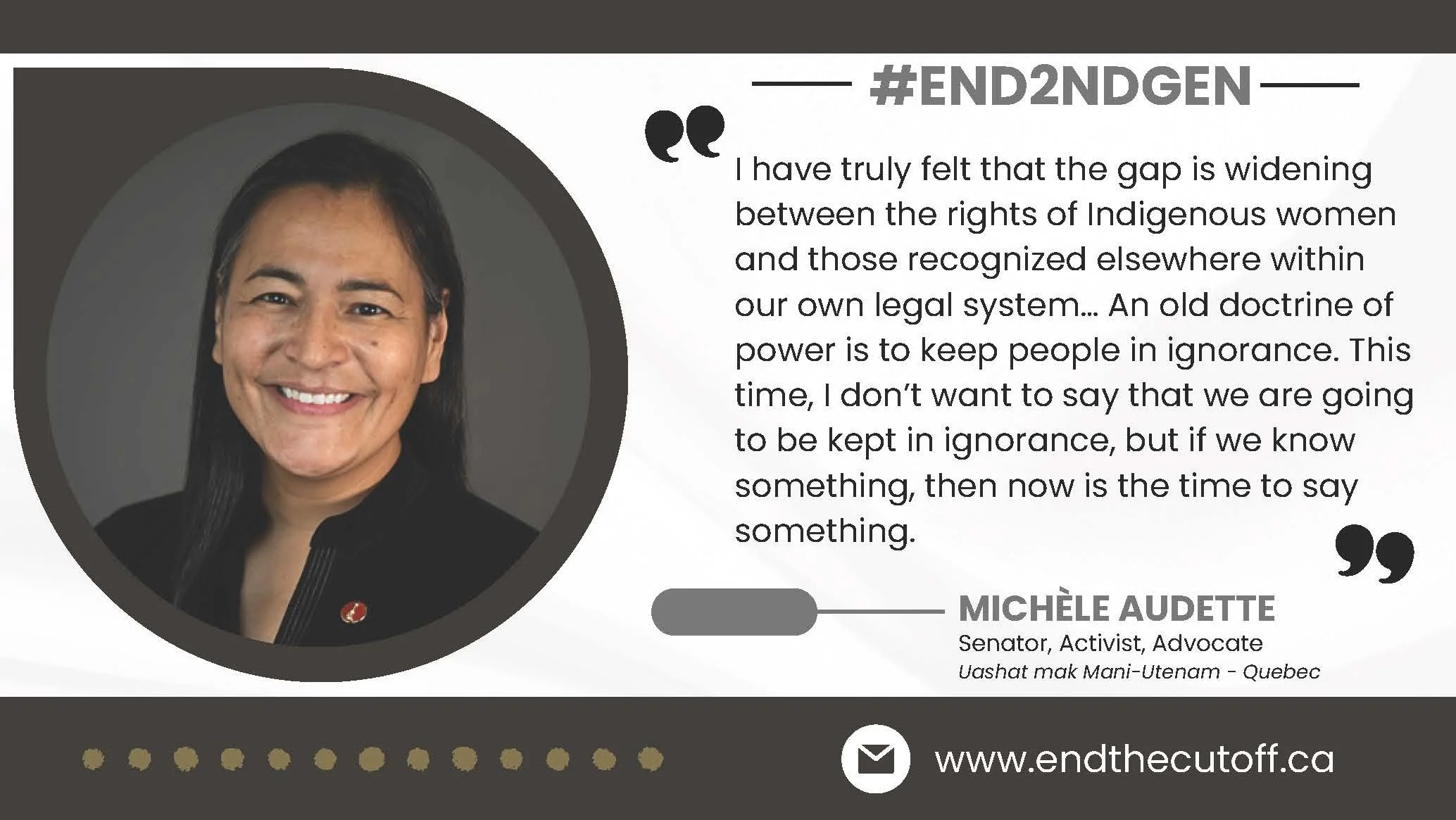
#End2ndGen
Bill S-2, An act to amend the Indian Act, is the latest attempt by the Government of Canada to remove blatant sex and race discrimination from the Indian Act. This Bill was designed principally to respond to discrimination against First Nations women and children caused by automatically stripping them of Indian status when a husband or father lost his status due to enfranchisement. The B.C. Superior Court recently ruled that this discrimination violates Canada’s Charter of Rights and Freedoms.
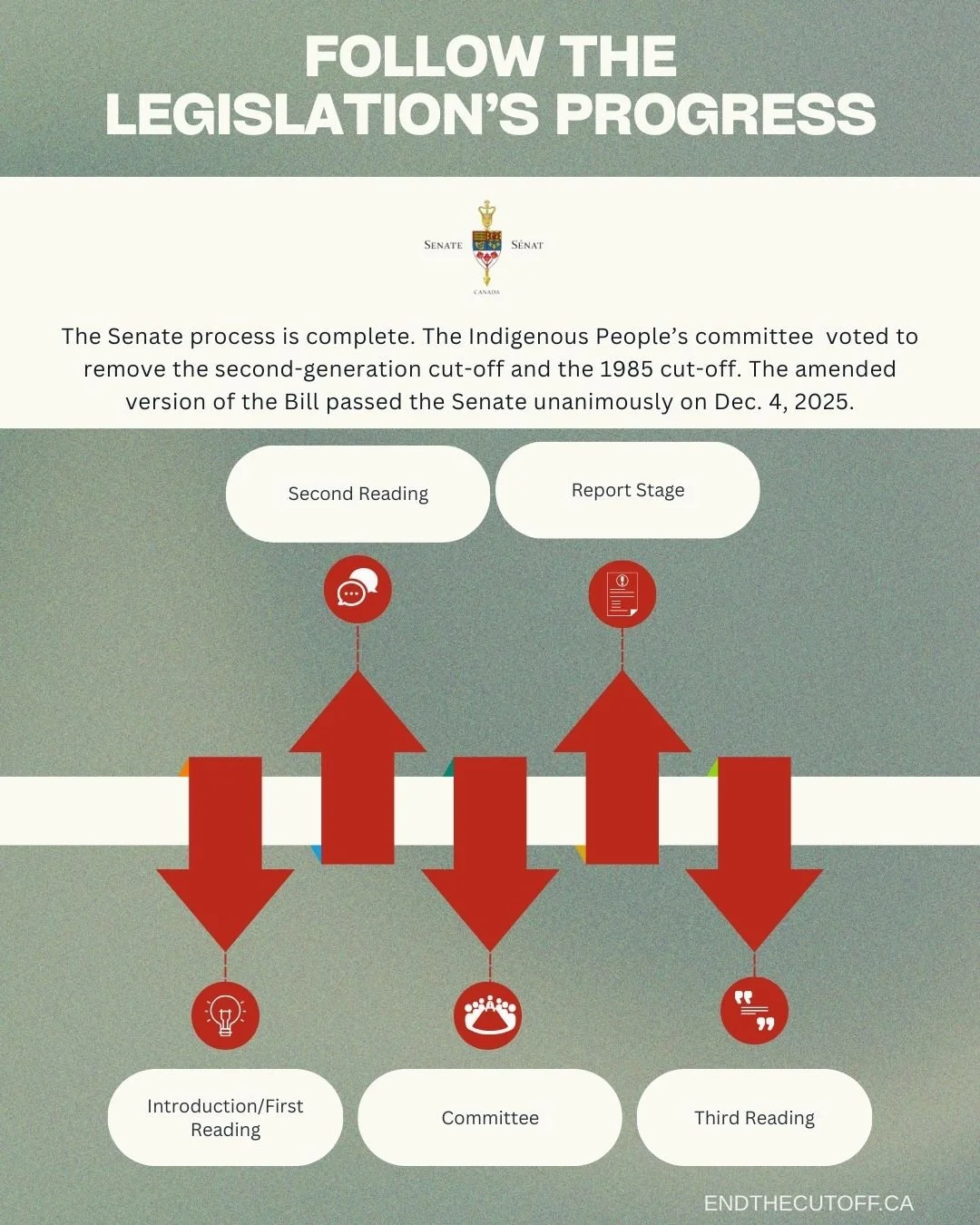
The Bill was first introduced in the Senate, where Senators recognized what advocates have been saying for decades: it’s time to stop tinkering with the Indian Act and making small changes only after long and costly legal battles. The Senate Committee on Indigenous Peoples, when studying the Bill, recognized that the central piece of discrimination that is still in the Indian Act is the second-generation cut-off. And now is the time to remove it.
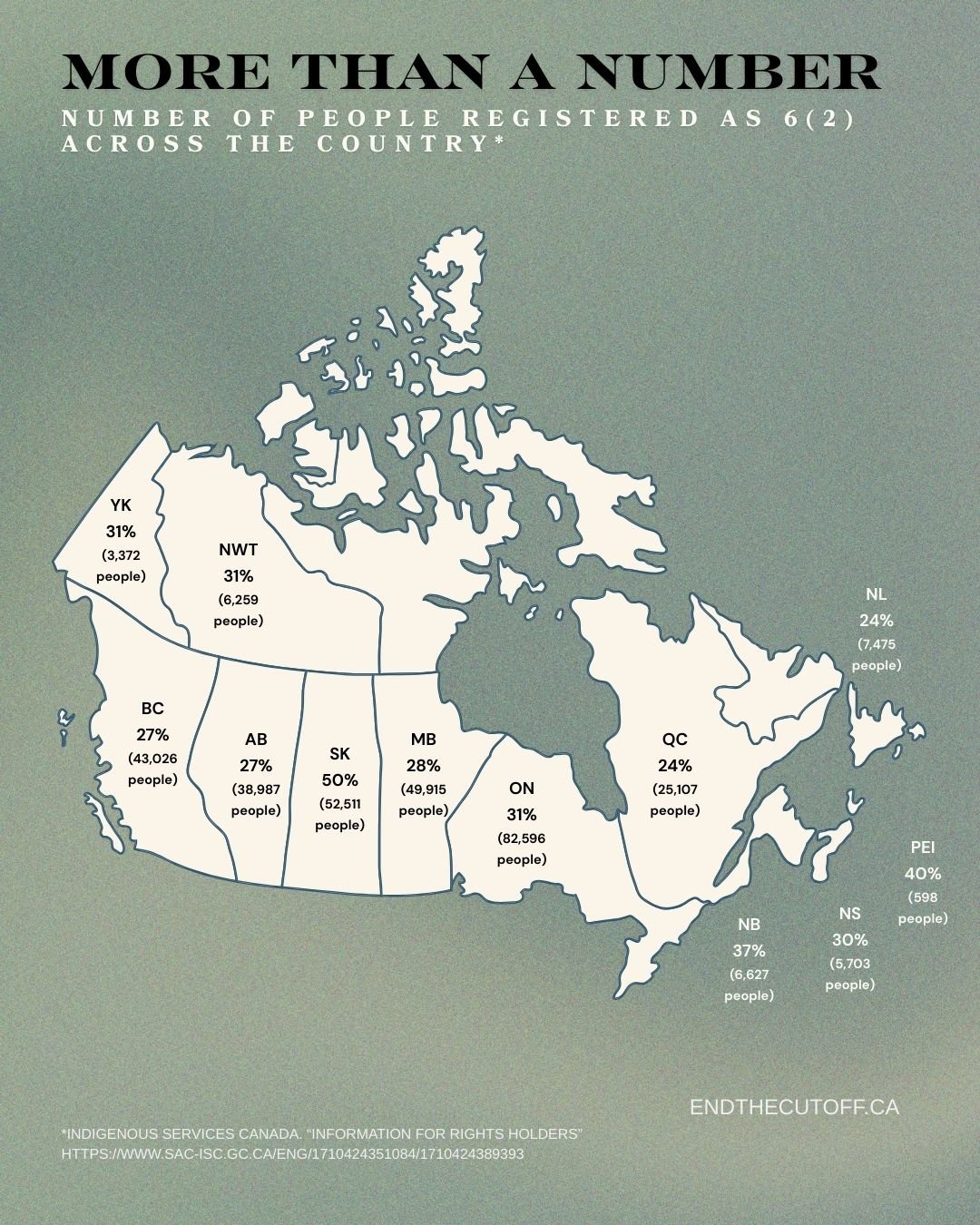
The second generation cut off penalizes both women and men who ‘out-parent’, that is, parent a child with a non-status person. When a person with full status 6(1) has a child with a non-status person, their child receives only partial status or 6(2). If a 6(2) person parents with a non-status person, that child is not entitled to status. That is the second-generation cut-off.
Toolkits
-
![Hands in a circle]()
Toolkit for First Nations, Communities and Organizations:
Who this toolkit is for:
- First Nation bands
- First Nation organizations
- Allied organizations -
![Hand holding plant]()
Toolkit for Individuals
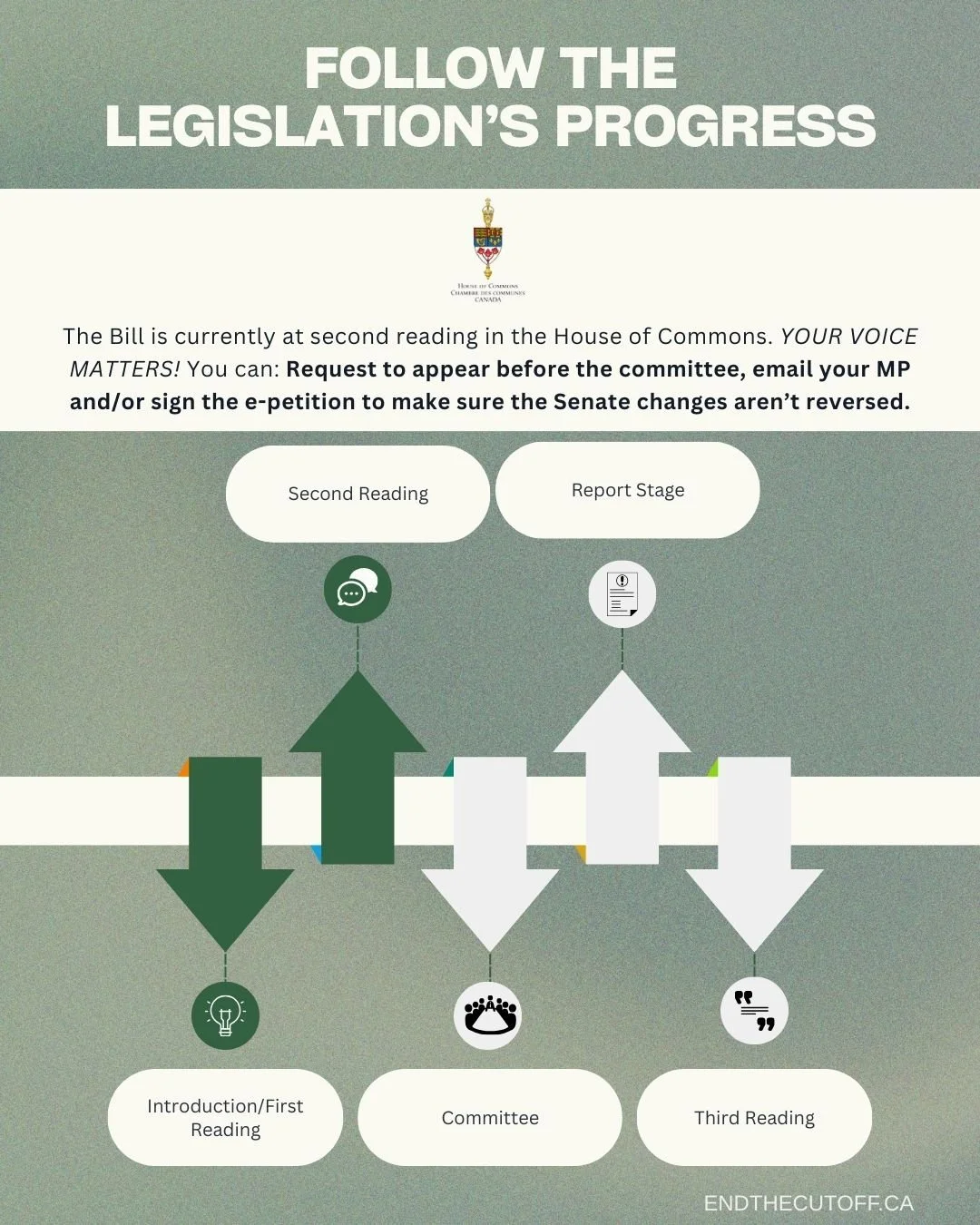
If you are a First Nation individual or an ally who believes that the government must act immediately to address this important human rights issue, your voice matters!
You can use one of our two templates (one for First Nations individuals and one for allies) and send them to make sure that your local MP, members of the House of Commons Indigenous Peoples and Northern Affairs committee, and key ministers all know how important this issue is to you.
View the House of Common’s petition!
Read Sen. PJ Prosper's June 3 submission to the House INAN committee
View the support so far! Don’t see your organization or community? Send a copy of your BCR or a letter from leadership in support of the Senate’s amendments to endsecondgen@gmail.com
Frequently Asked Questions
-
Sections 6(1) and 6(2) are the sections of the Indian Act designating Indian status. 6(1) status Indians can parent with anyone, regardless of status, whereas 6(2) status Indians must have children with another status Indian if they wish to ensure that their children will have Indian status. A 6(2) status Indian alone cannot transmit status to the next generation.
-
Because of rates of “out-parenting,” under the current policy, the numbers of those who are legally eligible for Indian status will diminish. These rules will make status Indians legally extinct in three or four generations. For some communities, it is even sooner. Without these amendments, there will eventually be no more Status Indians.
Since 1876, the Indian Act has discriminated against First Nations women and their descendants. The legislated extinction of the second generation cutoff first started in 1985. From 1876 to 1985, the Indian Act had a one parent rule for transmission of Indian status, but the one parent was male.
In the 1985 amendment, instead of giving Indian women the rights previously given to Indian men, the Canadian government claimed to end discrimination by introducing a two parent rule for both men and women, essentially taking rights away from all Indians. While requiring two parents may seem to be treating men and women in the same way, the Supreme Court has established that sameness is not equality when one party has a history of discrimination.
-
Bill S-2 was introduced in response to the ruling in Nicholas v. Canada, a B.C. Supreme Court case which Canada fought hard against and lost– resulting in these mandatory legislative amendments. The original Bill would have restored Status for around 3200 people and aimed to:
ensure entitlement to registration is transmitted the same for persons with a family history of enfranchisement including unmarried women, as it is for those without
enable persons who wish to have their names removed from the Indian Register to apply for deregistration
support women who were automatically transferred to their husbands' First Nation, and their descendants, to seek reaffiliation with their natal First Nation
replace certain offensive and outdated references about First Nations persons with a disability
Noting this opportunity to further end the sex and race discrimination in the Indian Act, such a crucial and critical issue, there were further amendments to Bill S-2 introduced by the Senate that would restore Status to many more, and protect the future of First Nations peoples in Canada by Amending the Indian Act to :
Remove the 1985-cut-off
Moves to a one-parent rule
This also eliminates the “unknown paternity” rule, which denies children of status mothers their rights if the father is unnamed on birth records.
Remove the second-generation cut-off
Ensure that current generations would still be entitled to be registered even if their parent has passed, if that parent would have been entitled to be registered under the new rules.
-
It means that if you or your kids have Indian status now, regardless of whether it is 6(1) or 6(2), their children will also have Indian status– no matter who they parent with. These amendments preserve our family, community, and Nation lines for forever.
-
Children of 6(2)s whose other parent is non-status will not be able to:
Inherit their family homes;
Access government-funded education support for pre-school, elementary school, high school and post-secondary;
Access Government-funded healthcare;
Be supported by Jordan’s Principle;
Exercise their Aboriginal right to fish and hunt on our traditional territories.
Non-status kids express a loss of sense of belonging and identity that is crucial to mental health.
-
No. The issue before us is Indian status, not membership or citizenship.
Indian status is the legal relationship between the Crown and Indians.
These amendments are about ending discrimination in Indian Status.
Band membership determines who can be a member of an Indian band (First Nation) under s. 10 (bands with their own membership codes) and s. 11 (bands without their own membership codes).
Citizenship is governed by the criteria set out in formal self-government agreements unique to each First Nation.
-
No, the second-generation cut-off was introduced in 1985, so we are talking about people impacted from 1985 forward (only 40 years)
They are people with direct, living relationships– the children and grandchildren of status Indians, not people disconnected from their Nations for many hundreds of years
The registration of our descendants actually prevents pretendians from falsely claiming they are Indians (First Nations) and prevents false membership claims in a First Nation as this is verifiable
-
Canada has never voluntarily amended Indian registration provisions after conducting nationwide consultations, only after forcing First Nations to go to court
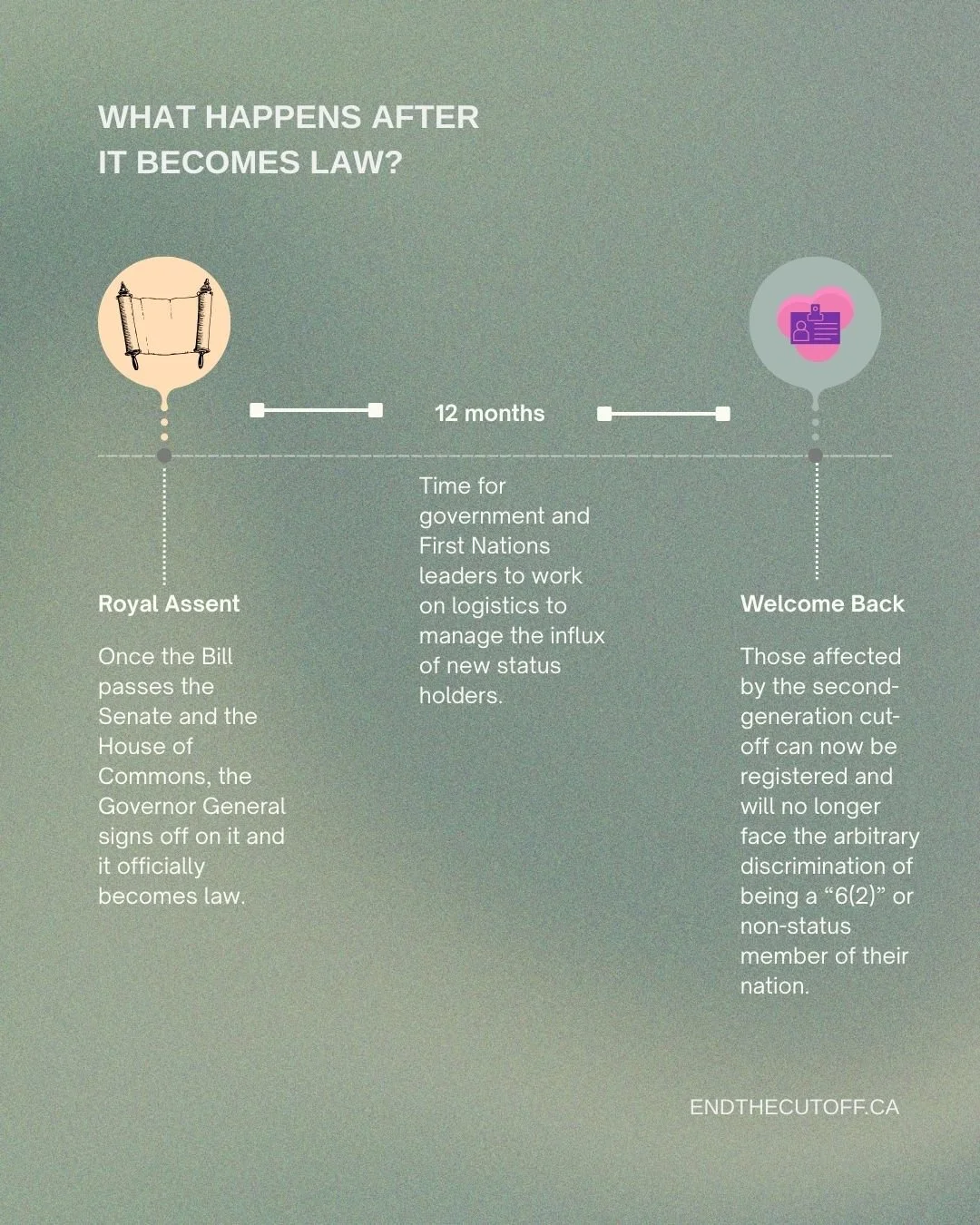
These amendments are a safety net, giving the government 1 year to conduct their consultations and introduce standalone legislation sooner.
This is a fail safe measure to protect the future of our people, if the government should fall or the Minister of Indigenous Services Canada is prevented from bringing forward standalone legislation this will protect the future of our people
These amendments allow time for consultations to continue on how to welcome back new members after eliminating discrimination and forced assimilation.
Canada cannot consult on forced assimilation and discrimination
Goes against: s.15 of the Charter; against UN Declaration on the Rights of Indigenous Peoples; against UN Convention for the Prevention and Punishment of Genocide; against the UN Convention on the Elimination of all Forms Discrimination Against Women (who called for these amendments in their recent Concluding Observations from their review of Canada in October 2024).
-
We do not promote the Indian Act or its racist inception and underpinnings. But, we know it’s not going anywhere anytime soon.
Since Canada determines Indian status, and Canada was the one that made a mess of Indian status rules in its attempts to forcibly assimilate us - then Canada must fix this mess.
Canada has the legal obligation to ensure our rights are respected, and they cannot offload the liabilities of their discriminatory laws to First Nations.
-
No, in fact the opposite is true.
First Nations rely on federal funding determined per capita, based on the number of status Indians in the Band.
The longer non-status children are not recognized by Canada, the longer Bands go without funding for those children causing a major financial pressure on the Bands
These children will continue to be born and if the Act does not grant them status, the financial pressures will continue to increase on the bands and individual families
Canada could easily renegotiate contribution agreements to adjust for any population increases. It is a matter of political will.
The bigger the status population in First Nations, not only does per capita increase, but so too do the calculations used to determine how much new money for infrastructure, band administration, etc.
We are talking about under 300,000 people over the next 40 years– that is about 7,000 people per year divided across all our Bands. Approx 12 people per Band, though numbers will obviously vary based on size.
-
The second generation cut-off impacts women and the descendants of women differently.
Two ways that the second generation cut-off specifically discriminates against First Nations women:
In Bill C-31, Canada continued many of the advantages men had under the old legislation. A couple headed by a status male was able to comply with the two parent rule as soon as it was enacted, whereas those descended through the maternal line could not and, in some cases, still can’t.
Under the two-parent rule, men have an advantage over women in two ways when it comes to identifying the other parent and conferring full status:
1: Because of the biological facts, it is easier for a man to comply with the rule that one parent must identify and name the other parent than it is for the woman (it is far easier to prove who the mother is)
2: First Nations women face disproportionate rates of violence, and fear of violence may be a reason for unstated paternity, as well as cases of rape, incest, etc.
Also, more First Nations women are single mothers, their inability to access programs and services for their children because of second generation cut-off causes hardships on them disproportionate to men.
The second generation cut-off perpetuates sex and race discrimination against women and is contrary to section 15 of the Charter.
Additional Reading
UBCIC/BCAFN - Another template letter: https://www.ubcic.bc.ca/ubcic_and_bcafn_urge_house_of_commons_to_pass_bill_s_2_and_eliminate_2nd_generation_cut_off
From Southern Chiefs: https://scoinc.mb.ca/scostatementsecondgenerationcutoff/
From Anishinabek Nation: https://anishinabeknews.ca/2025/12/anishinabek-nation-commends-senate-vote-to-end-discriminatory-indian-act-provisions-calls-on-house-of-commons-to-honour-first-nations-rights/
Senate and House Must Uphold Vote to Repeal 2nd Generation Cut-Off from the Indian Act
Senators vote to end the second-generation cutoff for ‘status Indians’
Mi’kmaq lawyer Pam Palmater on the necessity of ending the second-generation cutoff
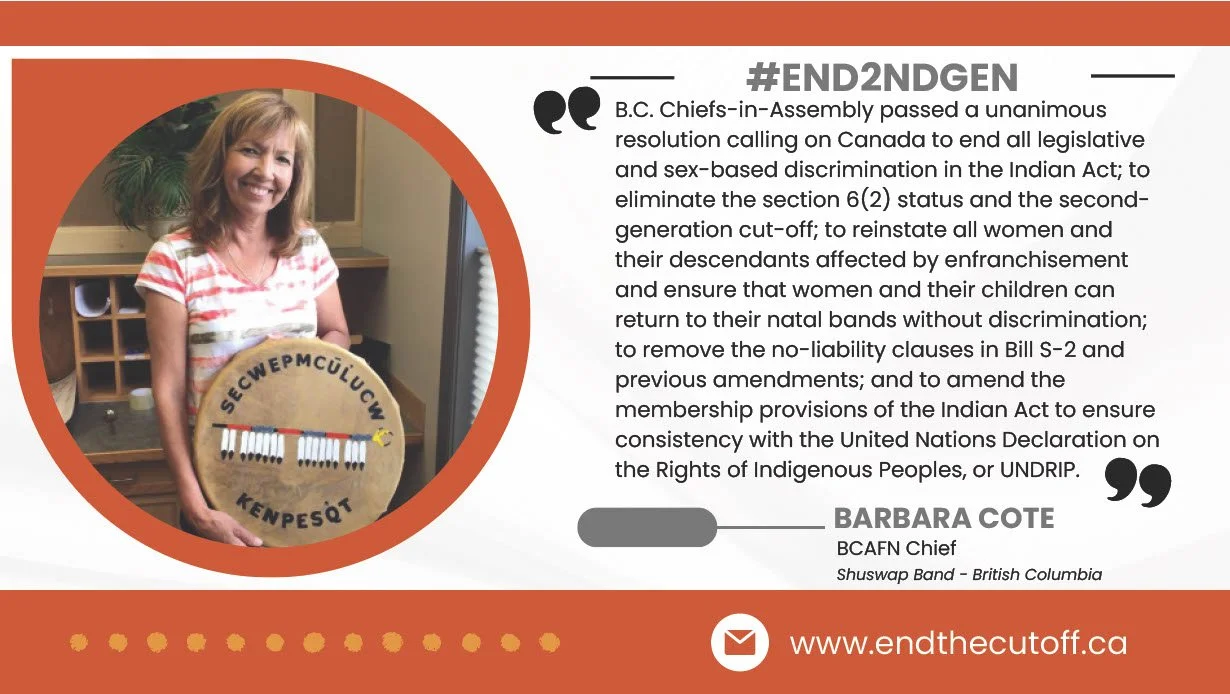
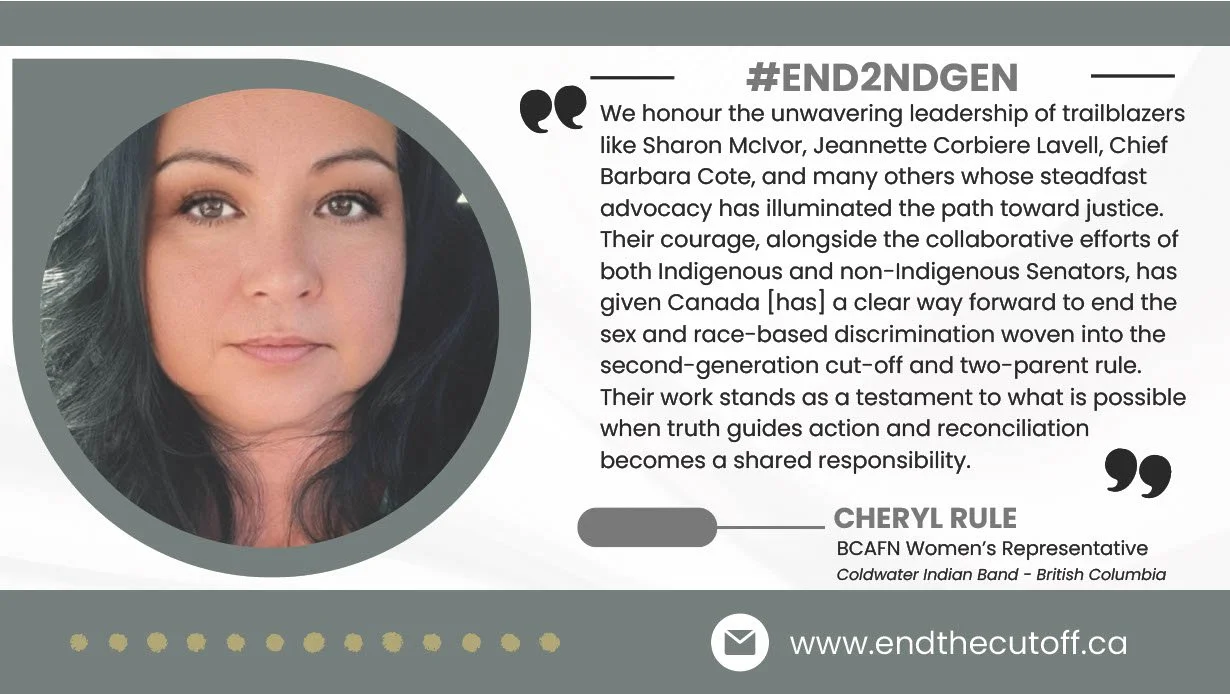
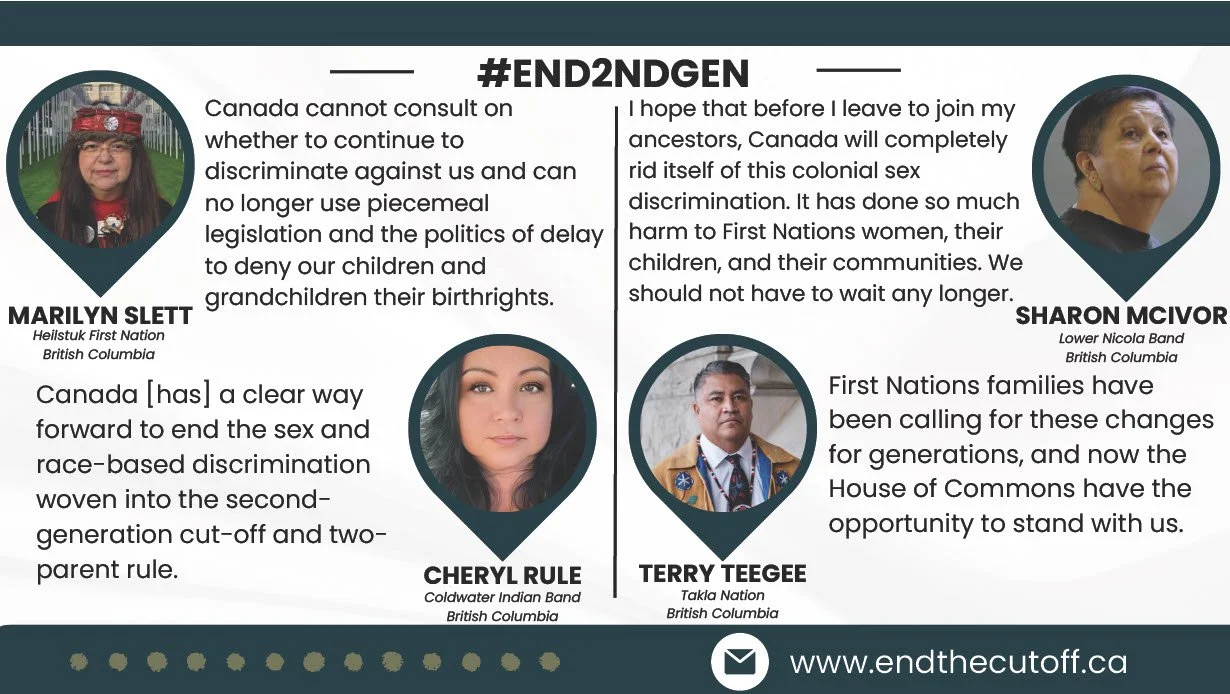
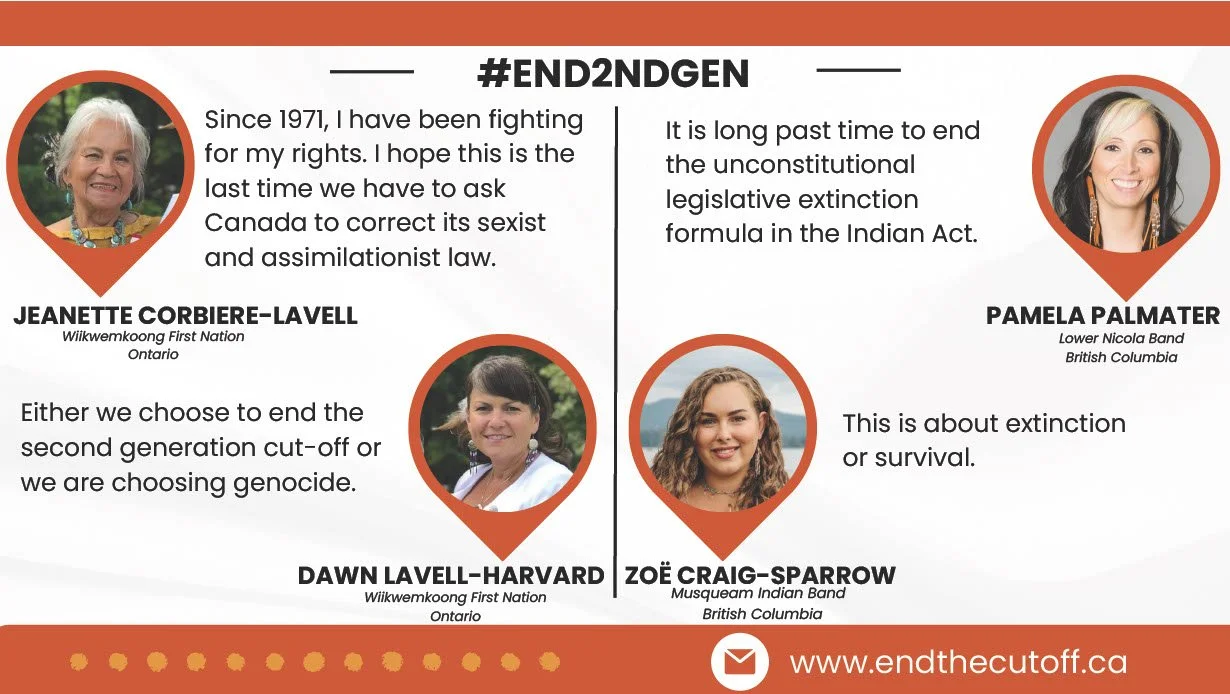
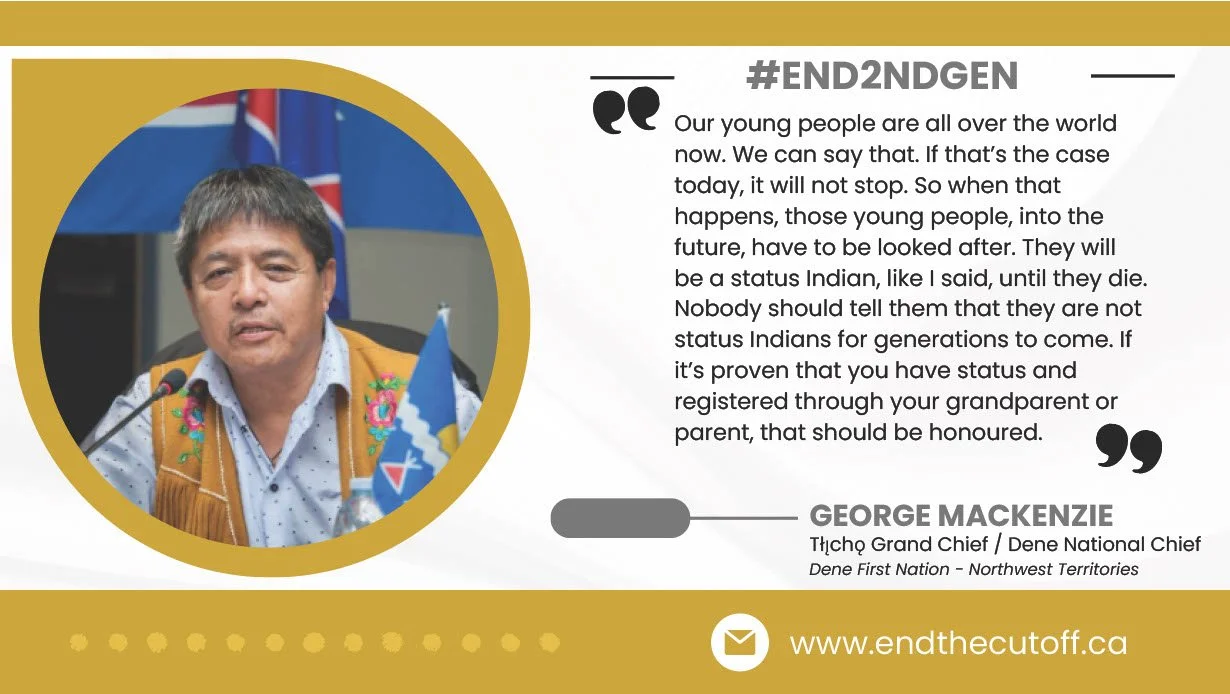
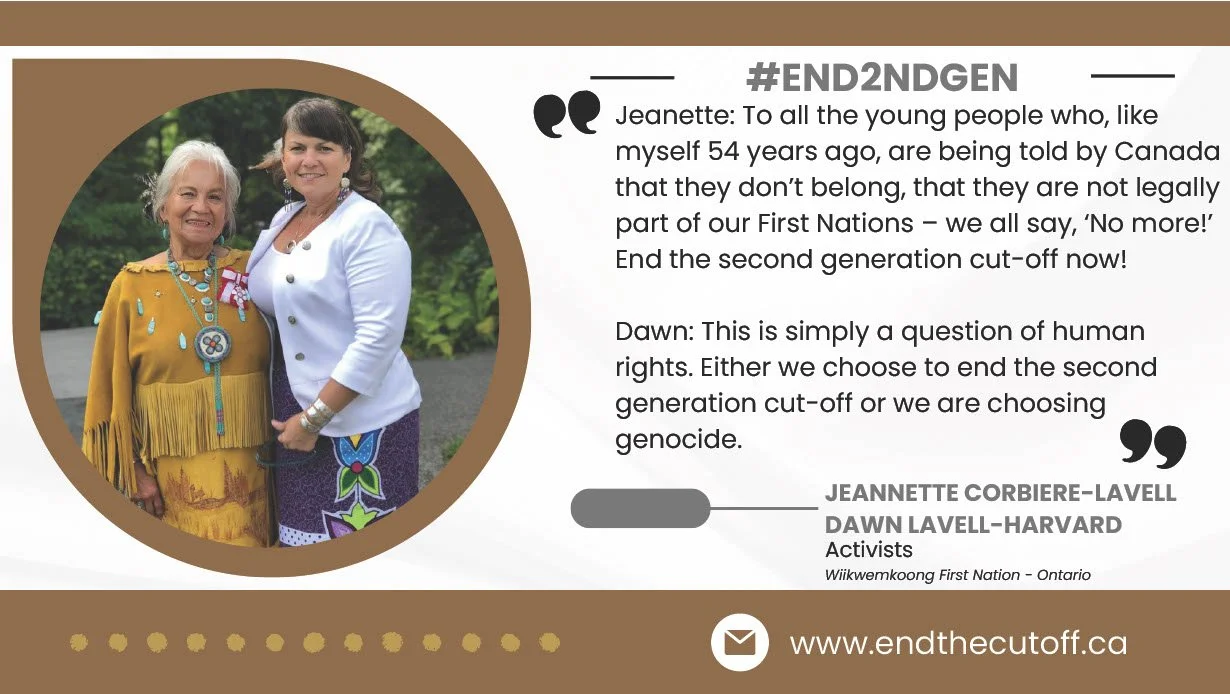
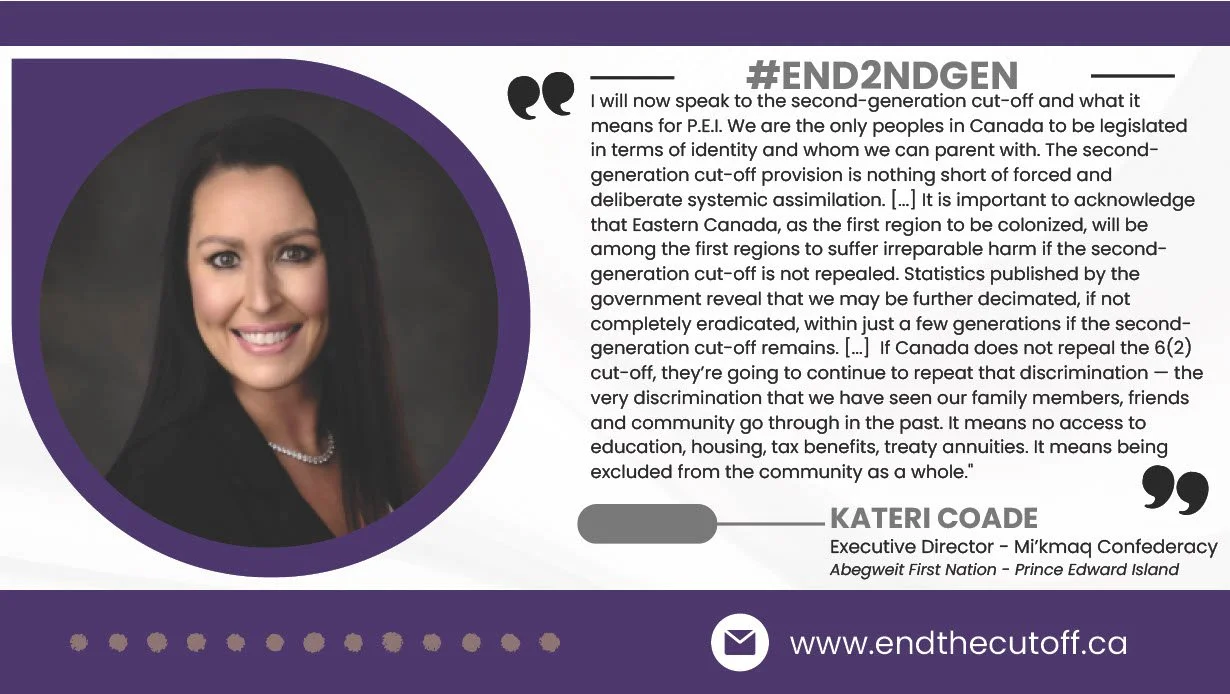
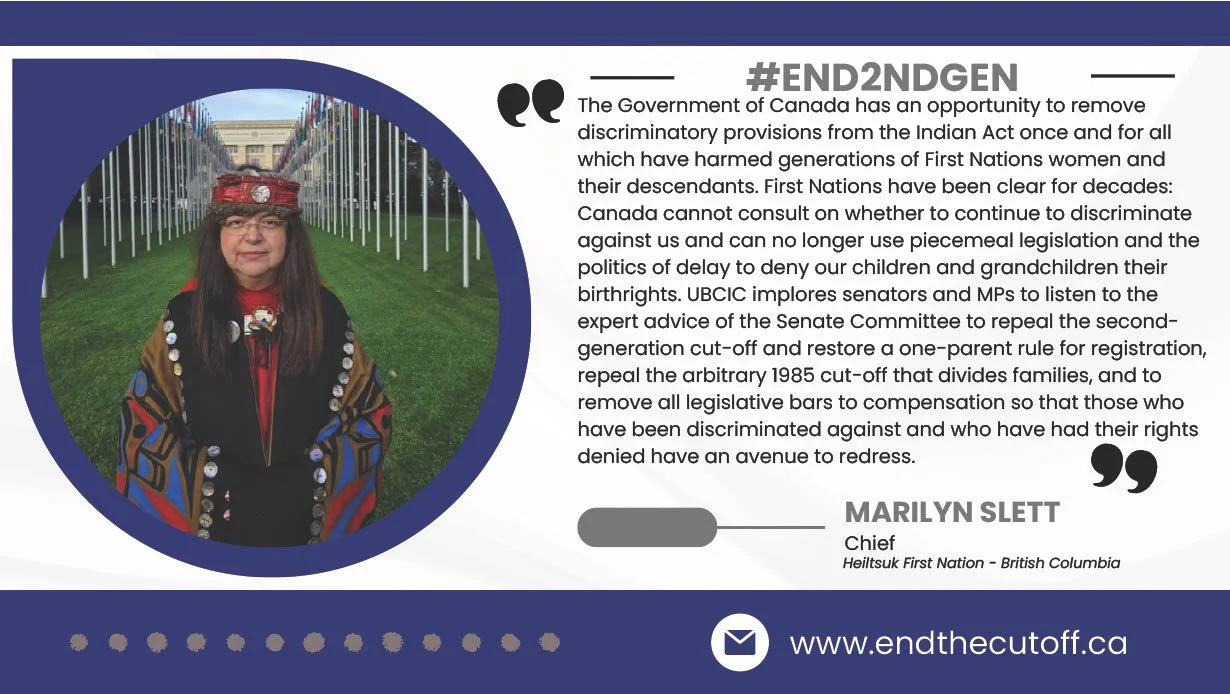
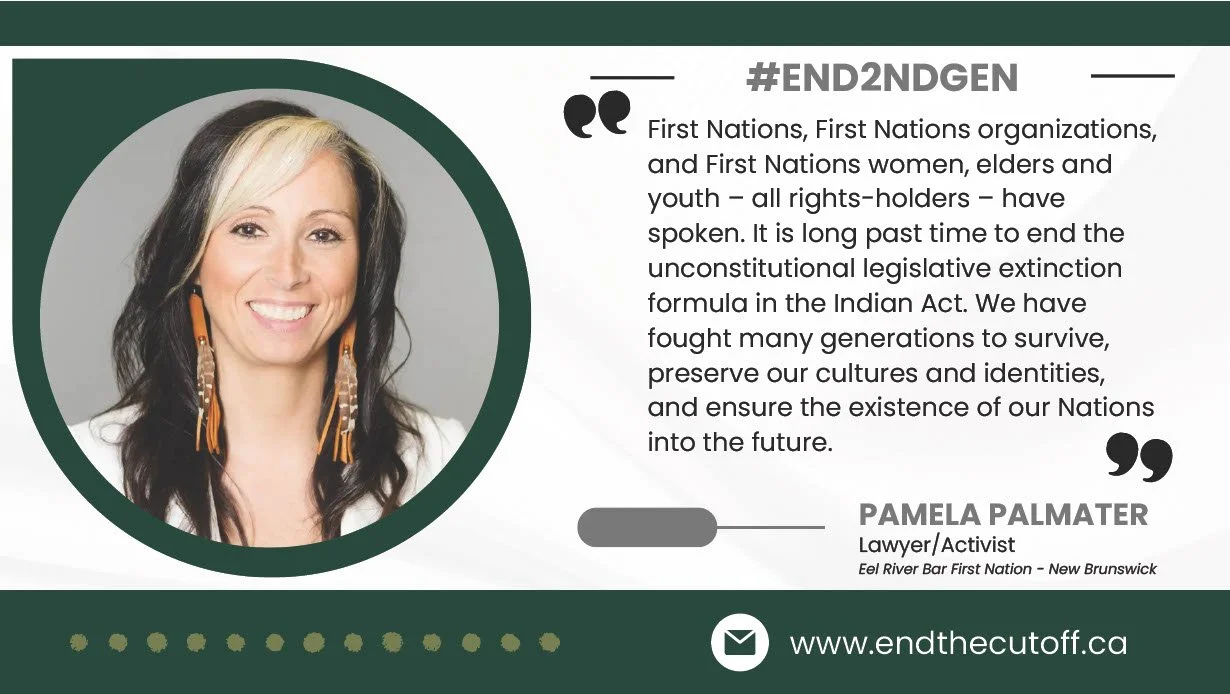
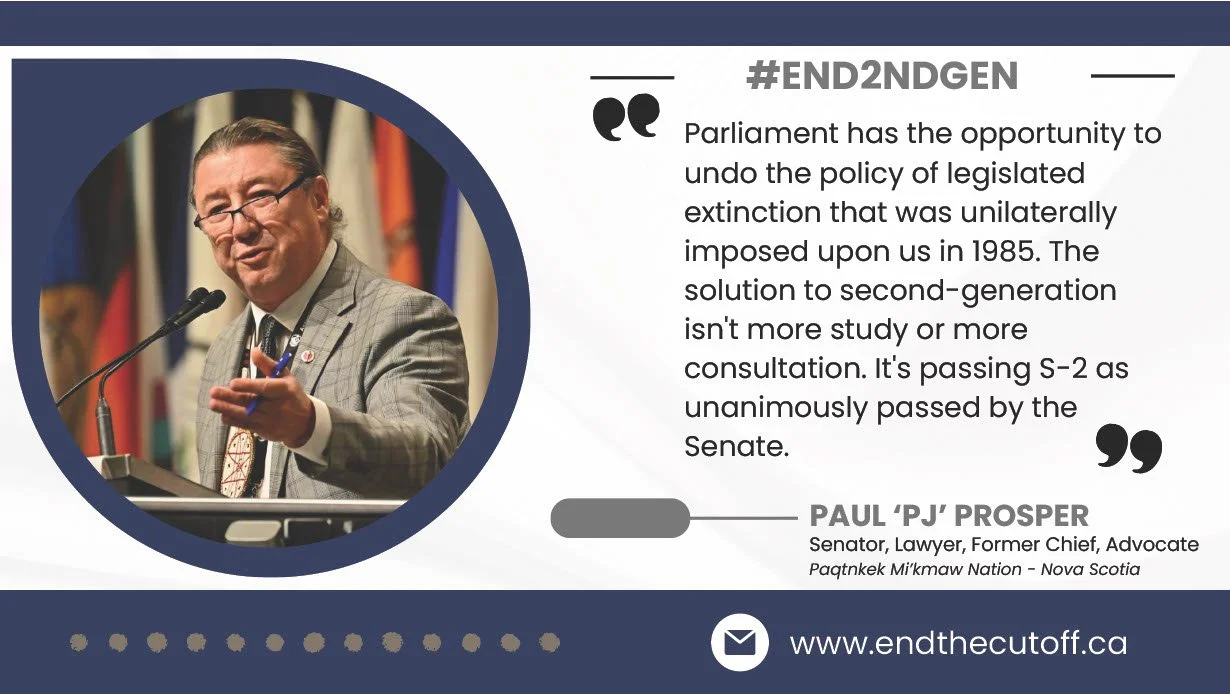
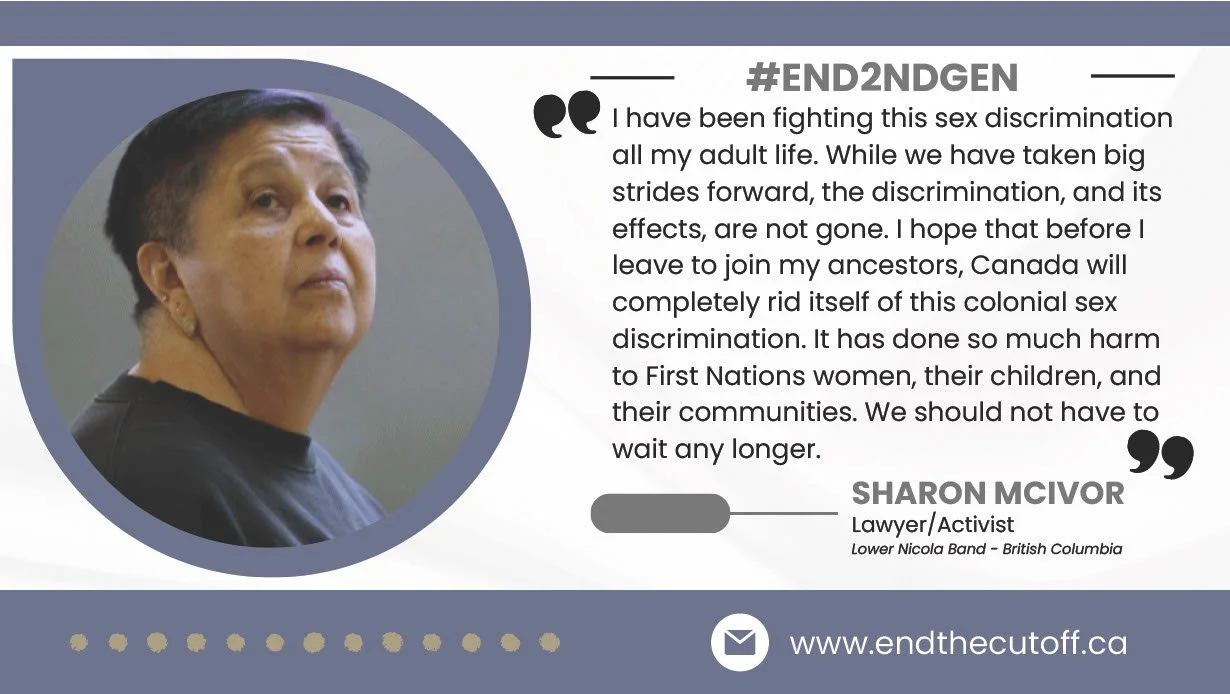
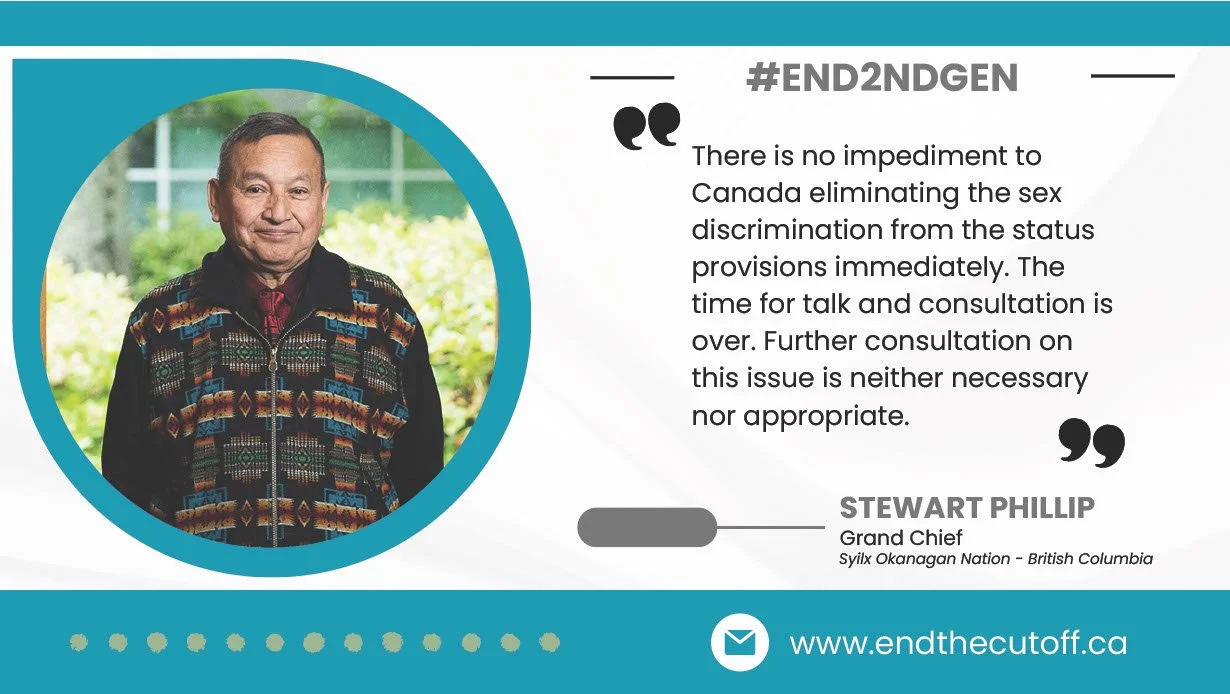
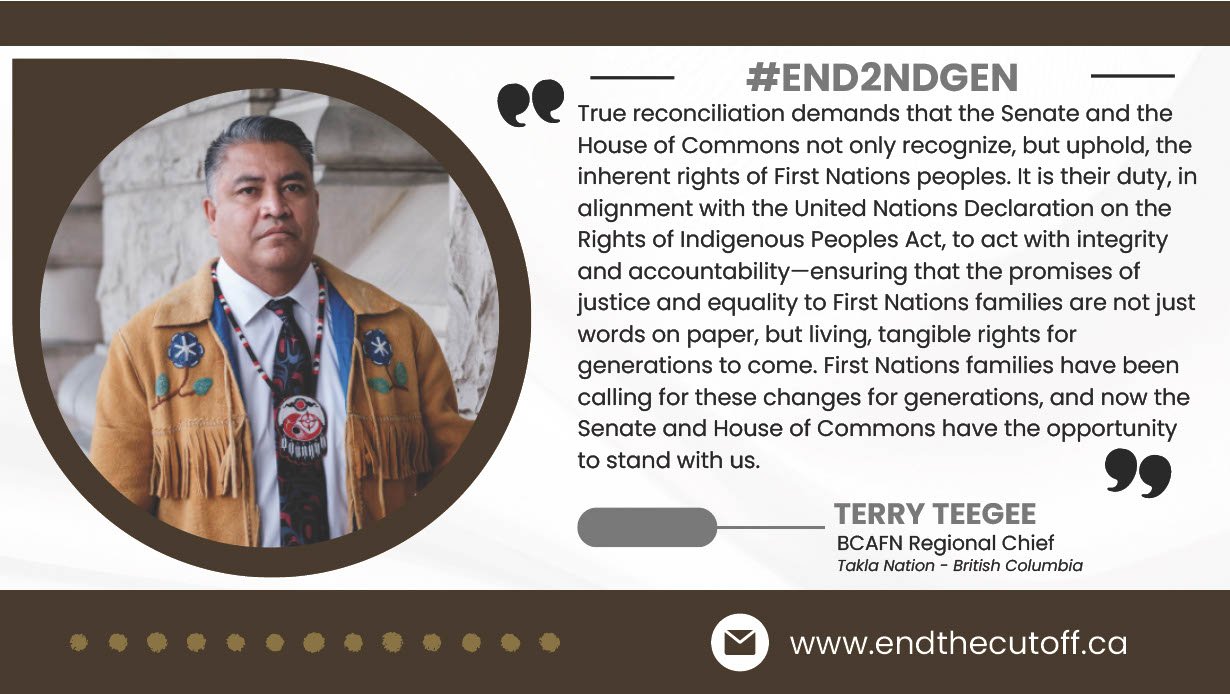
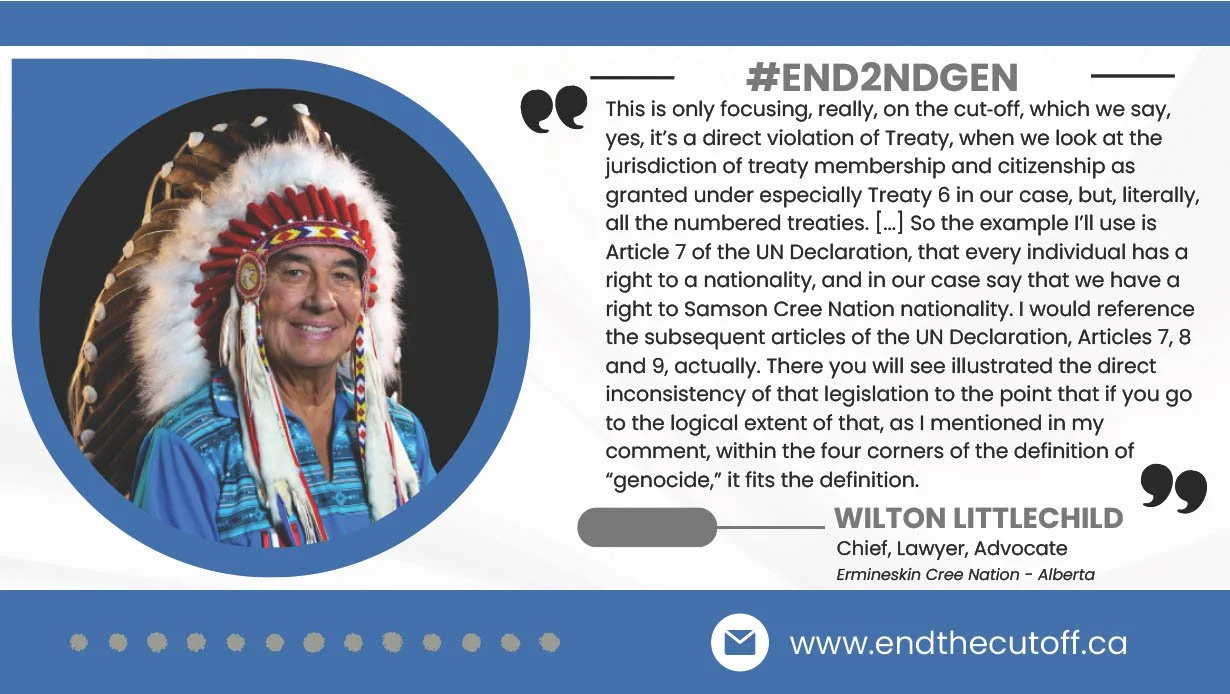
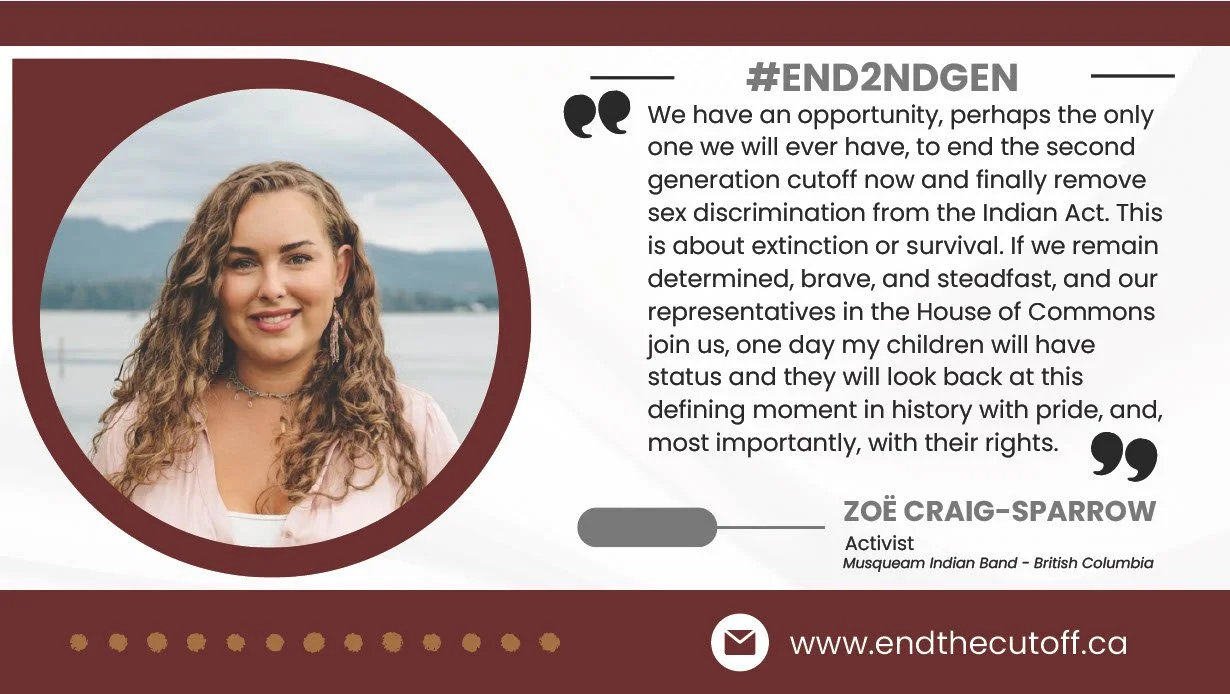
Quotes from members of the Indian Act
Sex-Discrimination Working Group
National registry of children excluded after the second generation
The National Registry of Children Excluded After the Second Generation is an initiative created by a group of parents and volunteers from Wendake.